

You bought all the right products. The cleanser, the serum, the fancy eye cream. But if you apply them in the wrong order, half of what you paid for barely reaches your skin. Skincare routine order is not a small detail. It decides whether your active ingredients actually work or just sit on top of your face doing nothing. This guide walks through the exact order dermatologists recommend. One step at a time, every product you own finally gets the chance to do its job.
Why Skincare Routine Order Actually Matters
Dermatologists agree on one simple rule. Apply your products from thinnest to thickest. One dermatologist interviewed on the topic explains it clearly. Products should go on in order of weight, so the lightest formulas go first and the richest ones go last. This is not just a beauty ritual. Apply a heavy moisturizer before a thin serum, and that serum cannot properly reach your skin. The active ingredients get trapped on top instead of sinking in where they actually work.
Getting the order right means every product you paid for finally has a real chance to work. It also helps explain why a routine that looks perfect on paper sometimes still leaves skin feeling off. Most dermatologists agree that five to seven steps are genuinely enough for most people. A longer routine is not automatically a better one. What matters far more is the order those steps happen in. This order applies whether you use three products or ten. It is worth learning once and remembering for good. It also comes down to whether each product gets the chance to do its job. That only happens if the next one does not go on too soon. Sunscreen alone needs a full teaspoon of product to reach the SPF number printed on the bottle. That is more than most people actually use.
Step 1: Cleanser
Every skincare routine starts here, morning and night. In the morning, cleansing washes away the oil your skin produced while you slept. At night, it removes makeup, sunscreen, and the dirt your face collected all day. Skipping this step means every product you apply next goes on top of a dirty base. A gentle, non foaming cleanser works well for dry or sensitive skin. Getting this first step right sets up your entire skincare routine order to actually work. A foaming or gel cleanser suits oily or acne prone skin better. Wearing makeup or sunscreen during the day changes things a little. A quick double cleanse at night gets your skin genuinely clean before anything else goes on. Aim for about sixty seconds of actual cleansing rather than a quick rinse. That gives the cleanser enough time to fully lift dirt and oil. Either way, warm water beats hot water, since hot water strips your skin and leaves it tight and dry.

Step 2: Toner
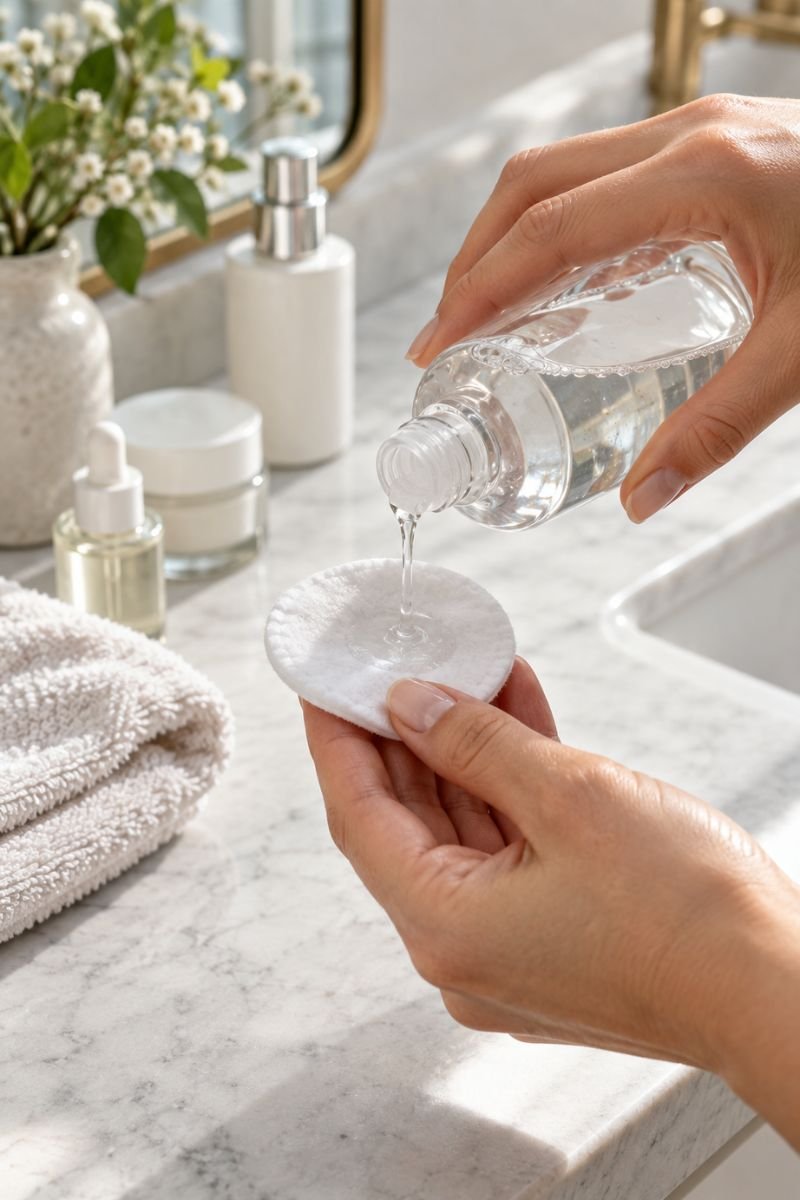
Toner is the one step you can skip without any real loss. It is thin and watery, so it always goes right after cleansing and before anything heavier. A good toner preps your skin to absorb the products that come next. This step fits into your skincare routine order right between cleanser and serum, never before either one. If your skin feels tight, dry, or sensitive, skip toners with alcohol or strong actives completely. If dullness or clogged pores are the concern, a gentle exfoliating toner can genuinely help. A hydrating toner with hyaluronic acid works well for dry skin specifically. Look for one labeled alcohol free if your skin reacts easily. Alcohol based versions can undo the very hydration your next steps are trying to build. Not everyone needs this step, and that is completely fine to skip entirely.
Step 3: Serum
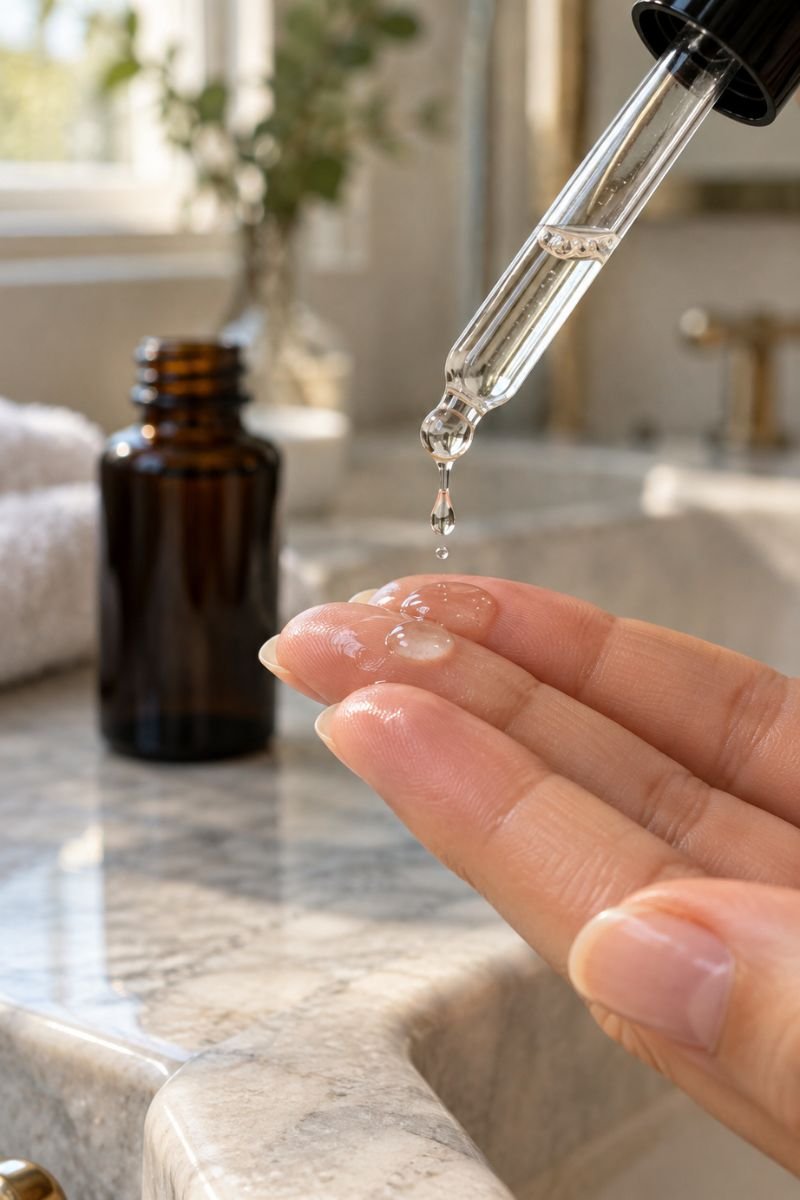
Serums carry the most concentrated active ingredients in your entire skincare routine order. That is why they go on early, right after cleansing and toning. Vitamin C in the morning brightens skin and helps protect against environmental damage during the day. Retinol or other reparative ingredients work best at night, while skin naturally repairs itself during sleep. Apply serums to slightly damp skin so the ingredients absorb more easily. Never layer more than one or two active serums at once. Stacking too many actives at the same time can leave skin irritated and red. If you are trying a new active for the first time, patch test it on a small area first. Wait a few days before using it on your whole face. Vitamin C serums are also sensitive to light and air. A dark bottle and a tight lid help the formula stay effective for longer.
Step 4: Eye Cream
The skin around your eyes is thinner than anywhere else on your face. So it deserves its own light layer of product. Eye cream goes on after your serum, using just your ring finger to gently pat it in. This step slots into your skincare routine order right after serum and before anything heavier. Your ring finger applies the lightest pressure naturally, which matters around such a delicate area. Look for hydrating ingredients if fine lines are the concern, or caffeine for puffiness and dark circles. Apply it along the orbital bone rather than too close to the lash line. Product that migrates into the eye itself can cause irritation. Most eye creams need several weeks of steady use before any real difference shows up. Give a new one a fair chance before switching. This step is optional, but genuinely worth adding once your basics feel solid.

Step 5: Spot Treatment
If a breakout shows up, spot treatment goes on right after your serum and before moisturizer. Applying it directly to a blemish keeps the strongest ingredients focused exactly where they are needed. This exact placement in your skincare routine order keeps the treatment concentrated right where it is needed. That is different from mixing it into your entire routine. A thin layer is enough, since more product does not mean faster results. It can actually irritate the skin around it instead. Salicylic acid and benzoyl peroxide are two of the most common spot treatment ingredients. Both work best applied sparingly to just the affected area. Avoid combining benzoyl peroxide with retinol on the same night. The two can cancel each other out and irritate skin at the same time. Let a spot treatment absorb for a minute or two before moving on to moisturizer. This step only applies on the days you actually need it.

Step 6: Moisturizer
Moisturizer comes after every serum and treatment, since its job is sealing everything in. This step anchors the back half of your skincare routine order, right before sunscreen takes over. A lightweight, water based formula works well during the day. This suits oily or combination skin especially well. A richer, oil based cream makes more sense at night. That is when skin has time to fully absorb it while you sleep. Applying moisturizer before your serums would block those active ingredients entirely. This step matters for every skin type, including oily skin that sometimes skips it by mistake. Do not forget your neck and the backs of your hands. Both show signs of aging just as quickly as your face does. If a moisturizer leaves skin feeling greasy after a few minutes, it is likely too heavy. That can mean the season changed or it never suited your skin type. A lighter formula is worth trying instead.

Step 7: Sunscreen
Sunscreen is the final step every morning, and dermatologists call it completely non negotiable. No skincare routine order is truly finished without this step, no matter how good everything before it was. It goes on after moisturizer, once everything else has settled into your skin. Choose a broad spectrum formula with at least SPF 30. Reapply every two hours if you spend real time outside. Skipping sunscreen undoes a huge amount of the work your other products are doing. Sun damage is one of the biggest causes of visible aging. Mineral sunscreens sit on top of skin. They can go on as the very last step. Chemical sunscreens work differently. They need close contact with skin, so they go on right after your other water based products. A nickel sized amount is the general guideline dermatologists give for the face alone. That is more than most people actually apply each morning. This is the one step in the whole routine that truly cannot be optional. Even on cloudy days, UV rays still reach your skin. Sunscreen belongs in your routine every single morning, not only when the sun feels strong outside.

Skincare Routine Order: Morning vs Evening
Your morning and evening routines share the same basic order, but they are not identical. Mornings favor lighter, protective products, cleanser, a light serum, moisturizer, and always sunscreen. Evenings have room for heavier treatments. That is because skin spends the whole night repairing itself without sun exposure to worry about. Retinol, thicker creams, and reparative serums all belong in your nighttime routine specifically. You do not need every step covered here to see real results. A cleanser, a moisturizer, and daily sunscreen alone cover the true basics dermatologists consider essential. Once this skincare routine order becomes second nature, the whole process takes only a few extra minutes each day. Add the rest of these steps only once that simple foundation feels completely solid. Give any new routine at least a few weeks before judging whether it is working. Skin genuinely needs time to respond to new products. Consistency matters more than complexity, a simple routine followed every single day beats an elaborate one used once a week. A solid skincare routine order pairs naturally with the rest of a beauty routine too. Think a fresh manicure or a quick, easy makeup look. Clear, well cared for skin is the base everything else builds on.