25 Brilliant Shoe Storage Ideas for Tidy Small Homes
The shoe storage ideas that actually work are the ones matched to the space you have, not the space you wish you had. I have tried most of them in a small house with one narrow entryway, one shared closet and a family that kicks its shoes off wherever it lands. These shoe storage ideas cover the front door, the closet, the dead space under the bed, and the walls and doors most people forget they can use.
Start where the mess starts. For most homes that is the entryway pile, then the closet floor, then the boots that slump in a corner all winter. Work through the groups below in that order, measure before you buy anything, and you will not need all 25. Most readers tell me three or four of these shoe storage ideas, combined, end the problem for good.
Before You Start: Measure Your Pairs and Your Space
Ten minutes with a tape measure saves every return trip: count your pairs, then measure the longest shoe and the tallest boot you own. A men’s size 12 trainer is about 12.5 inches long, so any shelf, cubby or box needs a full 12 inches of depth to hold it without the toes pushing out. Ankle boots stand 4 to 6 inches tall at the shaft, mid calf boots 10 to 12 inches, and knee high boots 15 to 18 inches, and that tallest number decides your shelf spacing.
Then measure the space itself. Note the floor area you can give up in the entryway, the clearance under your bed from floor to frame, and the swing of any door you plan to hang storage on. Write the four numbers down: pairs, longest shoe, tallest boot, and the width of the spot. Every one of the shoe storage ideas below lists the capacity and the size it needs, so you can match them against your four numbers as you read.
Entryway Shoe Storage Ideas That End the Door Pile
The entryway comes first because it is where shoes multiply: give the pairs you wear daily a fixed home within two steps of the door and the pile never forms. These entryway shoe storage ideas are shallow, closed or easy to wipe down, because this is the hardest working floor in the house.
1. Hide Daily Shoes in a Slim Flip Drawer Cabinet
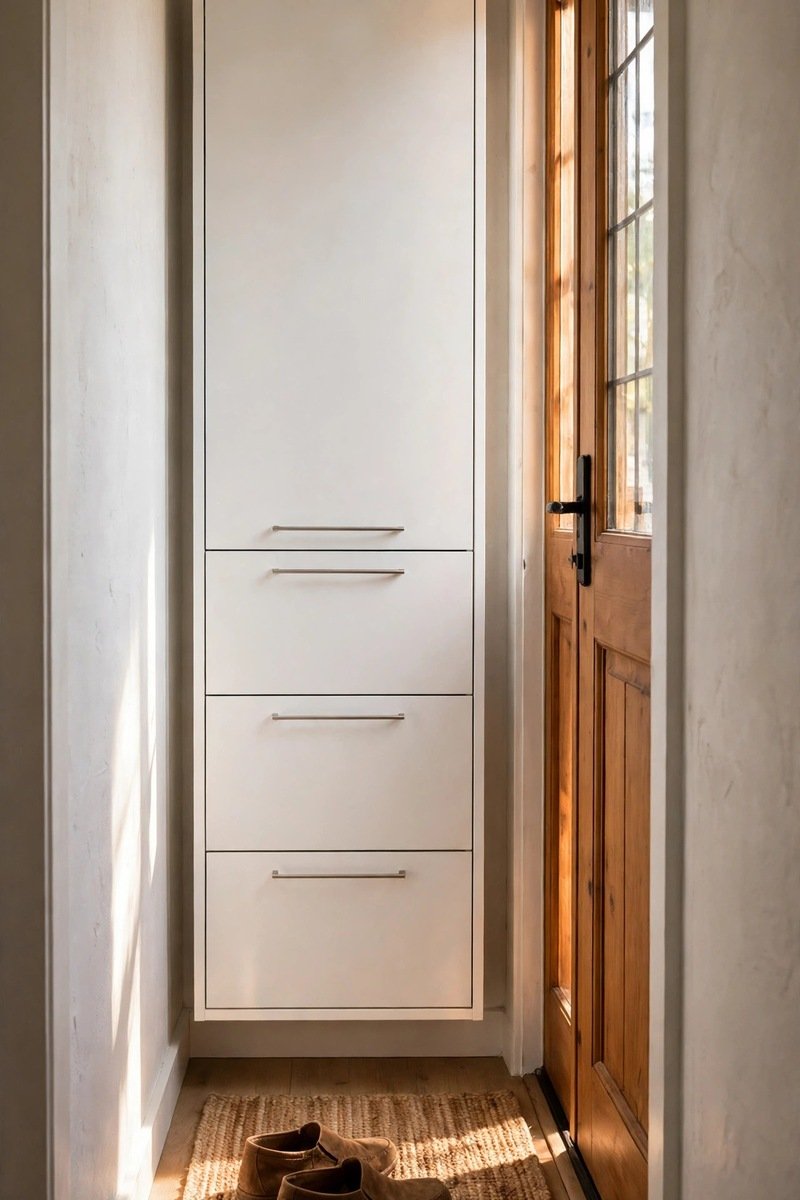 A flip drawer cabinet is the entryway fix I recommend most, because it hides everything and takes almost no floor. A two or three drawer unit is only about 9.5 inches deep, 24 to 31 inches wide, and holds 12 to 18 pairs with the toes pointing down. Prices run $70 to $140. One honest limit: chunky boots and most shoes over a men’s size 12 will not fit, so keep this one for everyday flats, trainers and heels.
2. Sit and Store With a Cubby Bench
 A bench with cubbies underneath does two jobs in the space of one, and the seat is what makes people actually use it. Look for a bench 36 to 42 inches wide with cubbies around 5.5 inches tall; that size holds 8 to 10 pairs and gives you a sitting height of 17 to 18 inches for pulling boots on. Solid wood or bamboo versions cost $90 to $180. Add a washable cushion on top and wet gloves and hats can land on the seat instead of the shoes.
3. Line Up a Tiered Bamboo Rack by the Door
 The classic three tier bamboo rack is still the cheapest honest fix for a door corner. A standard 27 inch wide rack holds 3 to 4 pairs per tier, so 9 to 12 pairs in total, and the open slats let wet soles drip and dry instead of soaking a shelf. They cost $25 to $40, and most stack two high if your collection grows. I keep one inside the coat closet door as overflow; of all the simple shoe storage ideas, this is the one I have bought twice.
4. Catch the Wet Boots on a Raised Lip Boot Tray
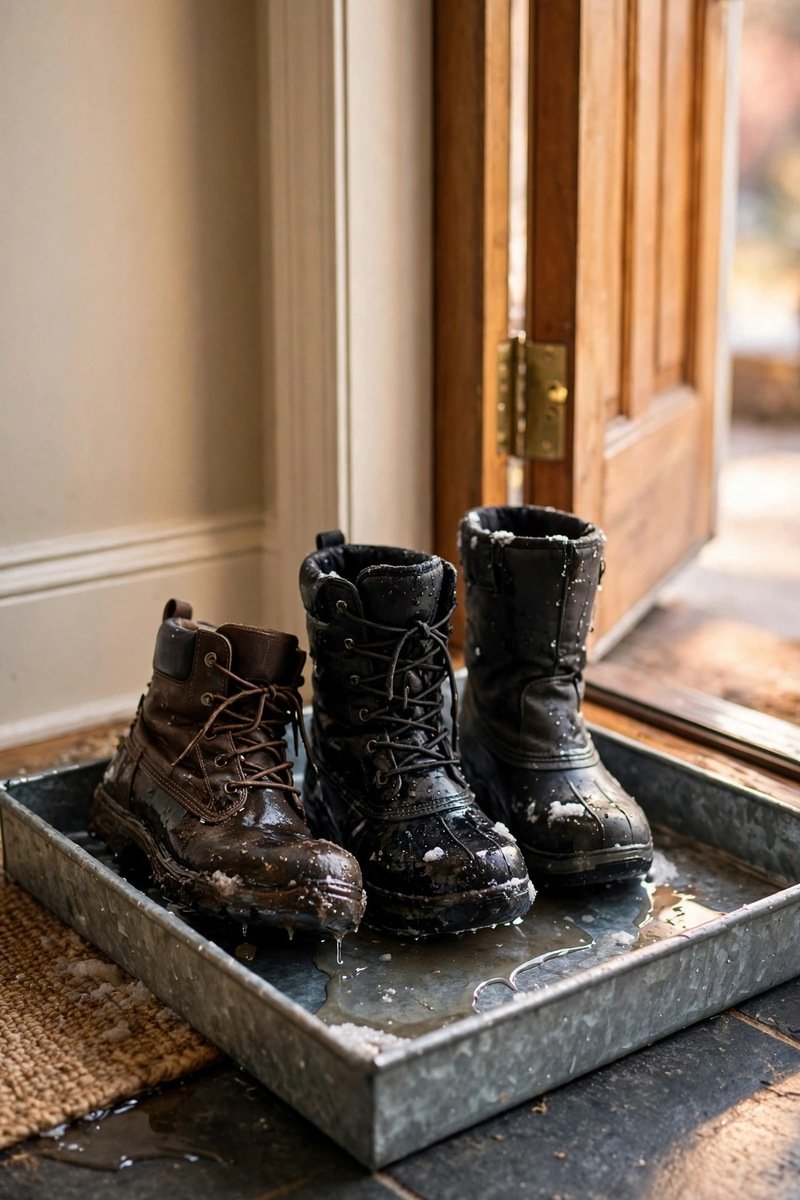 Some shoes should never go on a rack at all, and wet winter boots are top of the list. A boot tray 30 to 36 inches long with a raised lip of 1 to 2 inches holds 3 to 4 pairs of boots or soaked trainers and keeps melt water, salt and mud off your floor. Rubber and galvanized metal trays run $15 to $30. Put it where the boots actually come off, not where you wish they did, and empty it once a week in slush season.
5. Give Kids a Basket They Will Actually Use
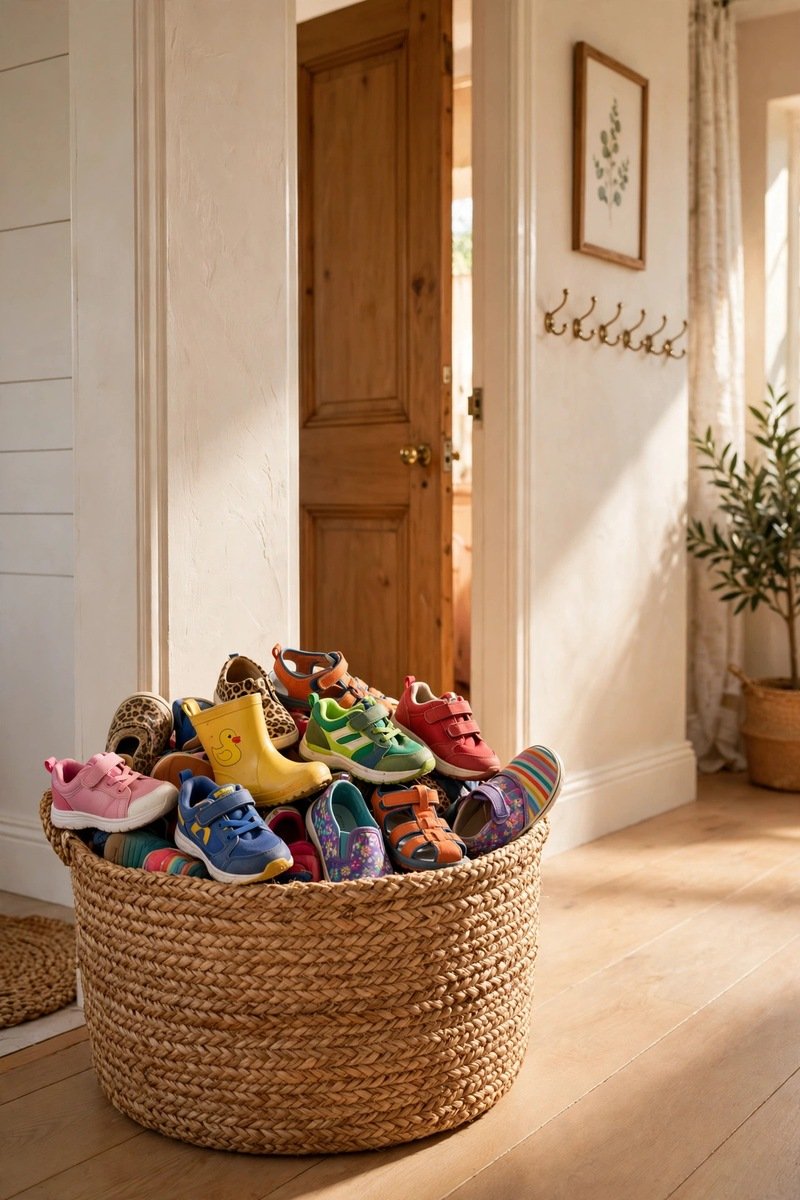 Kids do not open drawers, align pairs or use hangers, so stop asking them to. One open basket, 18 to 20 inches wide, parked beside the door holds 6 to 8 pairs of children’s shoes tossed in any way they like, and a pair can be found by tipping the basket out. Woven or fabric baskets cost $15 to $35. This is the least tidy of these shoe storage ideas and the one that works best, because a system a six year old uses beats a beautiful one nobody touches.
6. Solve Coats and Shoes Together With a Hall Tree
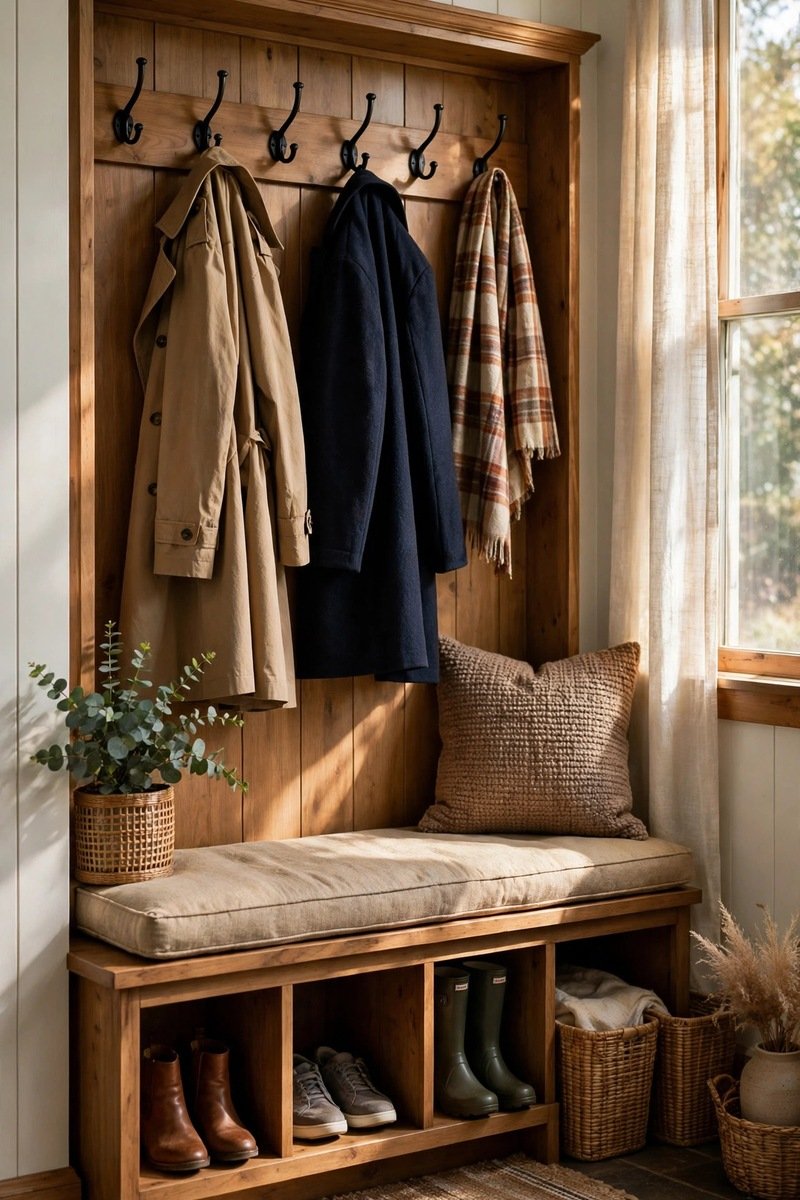 If your entryway pile includes coats and bags as well as shoes, a hall tree fixes the whole wall in one piece. Most stand 60 to 72 inches tall and 24 to 40 inches wide, with hooks above, a bench and a shoe shelf or cubbies below holding 6 to 8 pairs. Prices run $150 to $300. Measure your ceiling and door swing first, and anchor tall narrow models to the wall if children climb. It is the biggest of the entryway shoe storage ideas here, so measure twice.
Closet Shoe Storage Ideas for the Main Collection
The closet is where the main collection belongs, and closet shoe storage ideas succeed or fail on one thing: whether you can see every pair without moving another pair. Clear fronts, open tiers and single pair slots all follow that rule, and each of these holds far more than a floor pile in the same footprint.
7. Stack Clear Drop Front Boxes You Can Open in Place
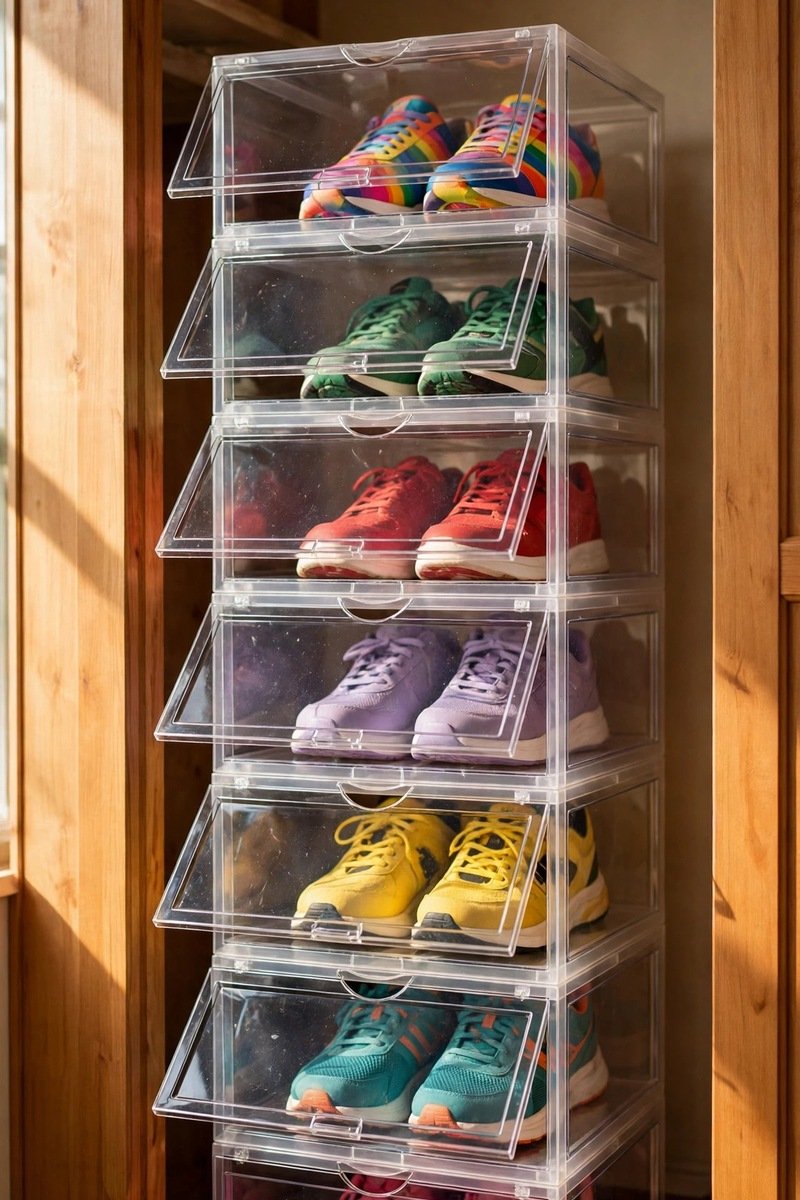 Clear drop front boxes are the closest thing to a perfect closet system I have found. Each box is roughly 14 by 11 by 7.5 inches, holds one pair, and the front panel flips down so you never unstack anything to reach the bottom pair. They cost $8 to $12 each, less in sets of 12, and stack five to eight high without leaning. Heels and ankle boots fit on their sides. Label the end of each box anyway; clear plastic still hides colour in a dark closet.
8. Stretch an Expandable Tiered Rack Across the Closet Floor
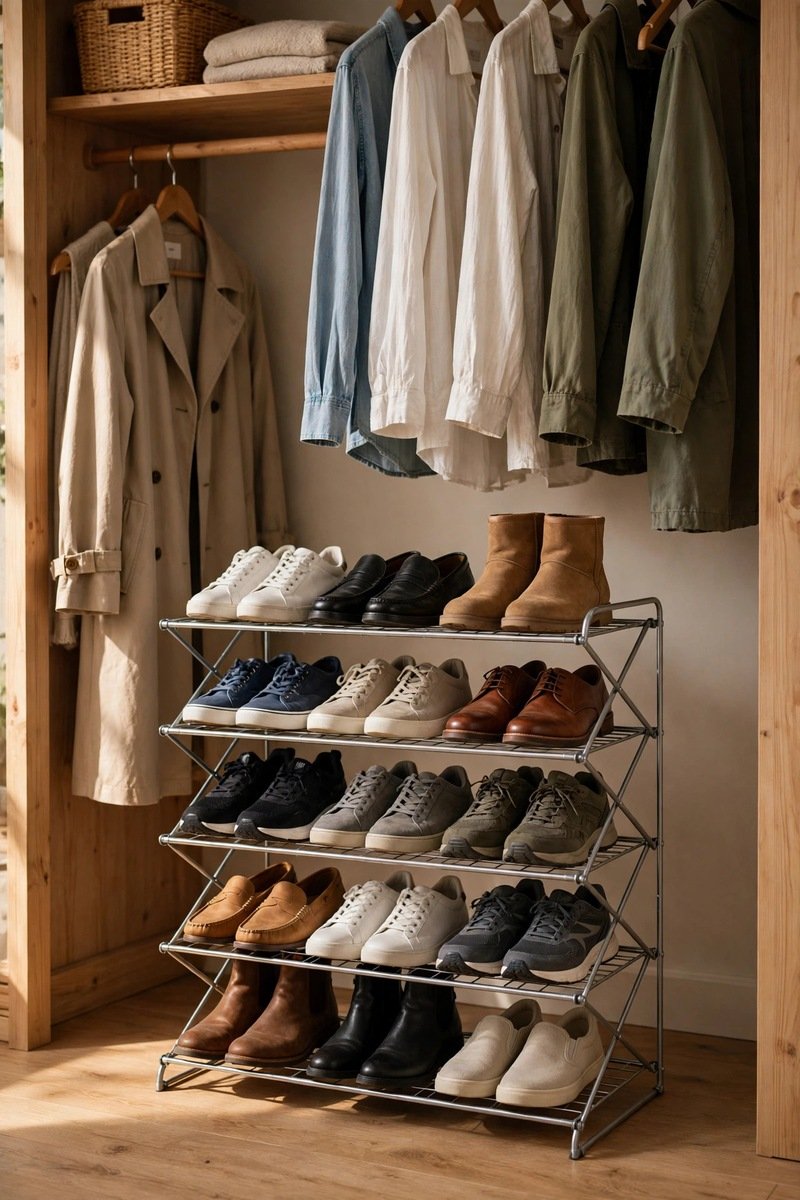 The dead floor under short hanging clothes fits a two or three tier expandable rack exactly. These telescope from about 24 to 46 inches wide, hold 10 to 16 pairs across the tiers, and the bars keep heels from sliding through if you choose a close bar model. Prices run $30 to $60. This is one of the shoe storage ideas I suggest for renters, because it needs no screws, no drilling and no permission, and it packs flat when you move.
9. Hang a Shelf Organizer From the Closet Rod
 A hanging shelf organizer turns two inches of rod space into a column of shoe slots. Most have 6 to 10 shelves, hold around 10 pairs, and cost $15 to $25 in canvas or fabric. Keep it for light shoes only: flats, sandals, trainers and children’s shoes. Heavy boots bow the shelves and pull the whole column sideways within a month. I use mine for the in-between shoes, the ones worn weekly but not daily, and it keeps them off the floor entirely.
10. Tilt Shoes Forward on Angled Shelves With a Heel Rail
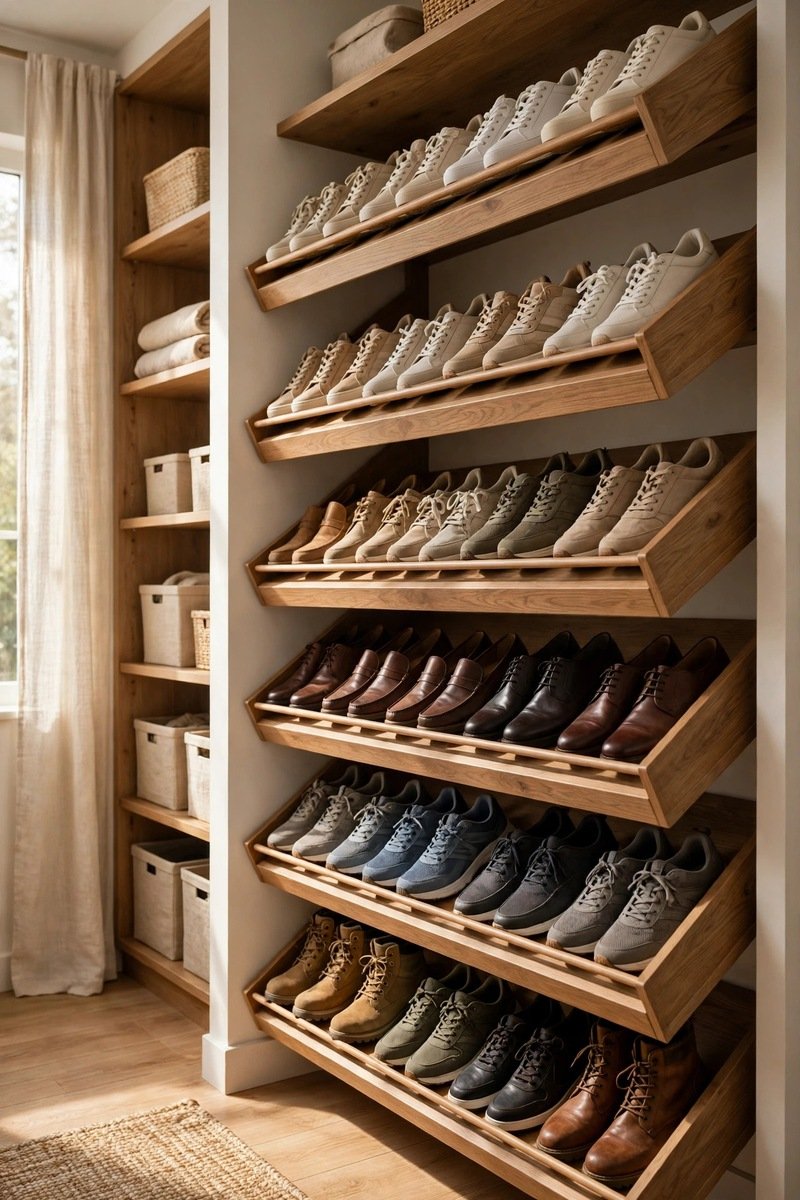 Angled shelves are what shoe shops use, and the tilt is the point: every pair faces you, toes down, ready to grab. Build or buy shelves at a gentle slope with a thin front rail to stop sliding, spaced 6 to 7 inches apart vertically for shoes and 12 inches deep. A run of four shelves 30 inches wide displays 12 to 16 pairs. This is a build it once option for a dressing closet, and it makes a collection feel like a shop rail in the best way.
11. Spin a Rotating Shoe Tree in the Corner
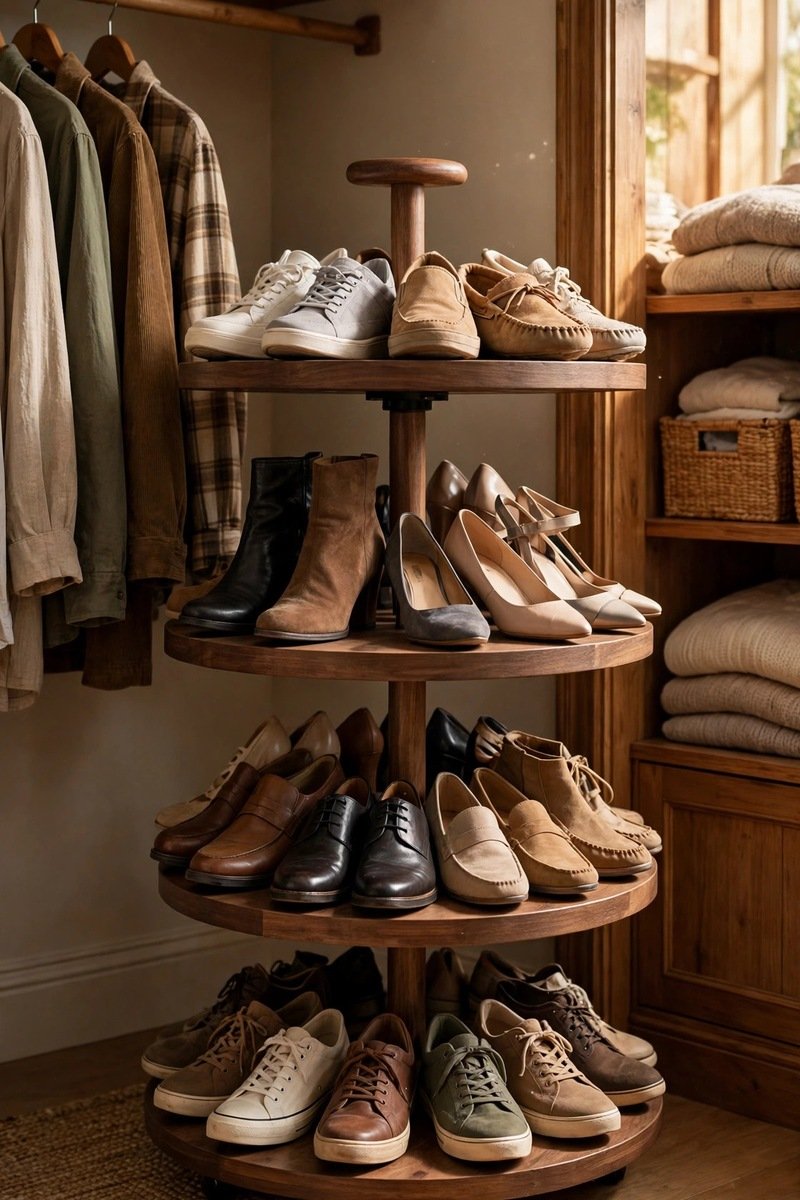 A rotating shoe tree uses the corner everyone wastes. The stand is a central pole with adjustable tiers that spin, on a footprint of only 12 to 15 inches square, and a five to seven tier version holds 18 to 24 pairs. Expect to pay $60 to $120. Set the heaviest boots on the lowest tier so the stand stays steady, and leave an inch of spin clearance on every side before you fill it. For a deep collection in a tiny footprint, few shoe storage ideas come close.
12. Sort One Pair Per Cube in a Cubby Unit
 Cube organizers work for shoes the same way they work for everything else: one pair per cube, nothing hidden behind anything else. A 12 or 16 cube unit holds 12 to 16 pairs, each cube around 12 inches wide, and flat pack versions cost $50 to $110. They suit children’s rooms and mudrooms especially well, because a cube per child or per shoe type ends the morning argument. Add small labels on the cube edges if more than one person shares the unit.
Hidden Shoe Storage Ideas: Under the Bed and Out of Sight
Hidden storage is for the second collection: the off season boots, the occasion heels, the pairs in rotation. Under bed and inside furniture shoe storage ideas trade instant access for floor space you were not using at all, and in a small home that trade is usually worth it.
13. Roll a Divided Bin Under the Bed
 A rolling under bed bin turns the biggest dead space in the bedroom into a shoe drawer. Look for a bin 36 to 40 inches long with small wheels and adjustable dividers; that size holds about 12 pairs. The one measurement that matters is height: most bins need 6 inches of clearance, so measure from your floor to the bed frame before ordering. Rigid sided versions cost $30 to $55 and protect shoes far better than bags when the bin is dragged out weekly.
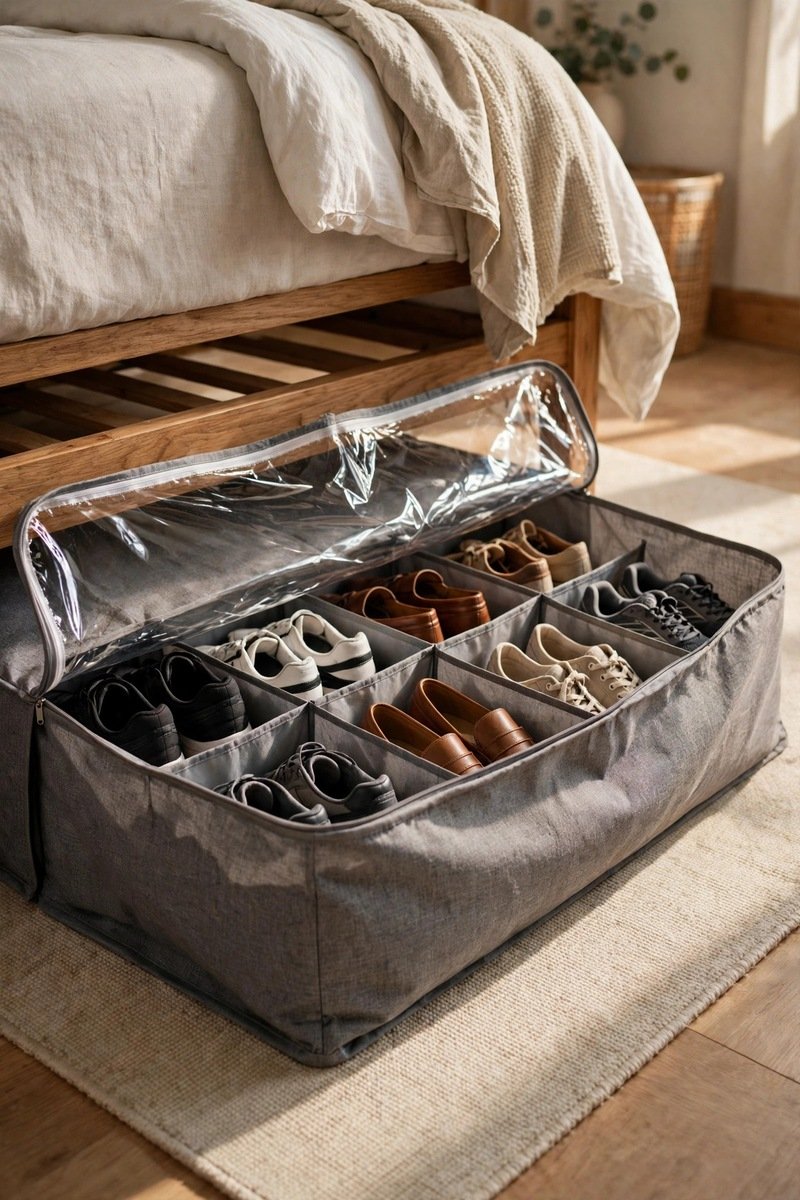
14. Zip Pairs Away in Low Profile Under Bed Bags
 Where a rigid bin will not fit, a fabric under bed bag will. These sit about 5 inches tall, come in pairs, and each holds 10 to 12 pairs in individual slots with a zip top and a clear window. A set costs $20 to $35. They are dustproof rather than crush proof, so use them for trainers, sandals and soft shoes, and keep structured heels and boots for bins and boxes. It is the softest of the hidden shoe storage ideas, and the one that fits the lowest beds.
15. Hide Eight Pairs Inside a Storage Ottoman
 A storage ottoman at the foot of the bed hides a surprising amount of footwear. Divided interiors and internal shoe pockets hold 8 to 10 pairs in a 30 to 36 inch ottoman, and the piece still works as a seat, a footrest and a place to sit while you put the shoes on. Prices run $70 to $150. Of all the hidden shoe storage ideas, this is the one guests never guess, and it suits occasion shoes that need dust protection more than daily access.
16. Fit Pull Out Drawers Under the Stairs
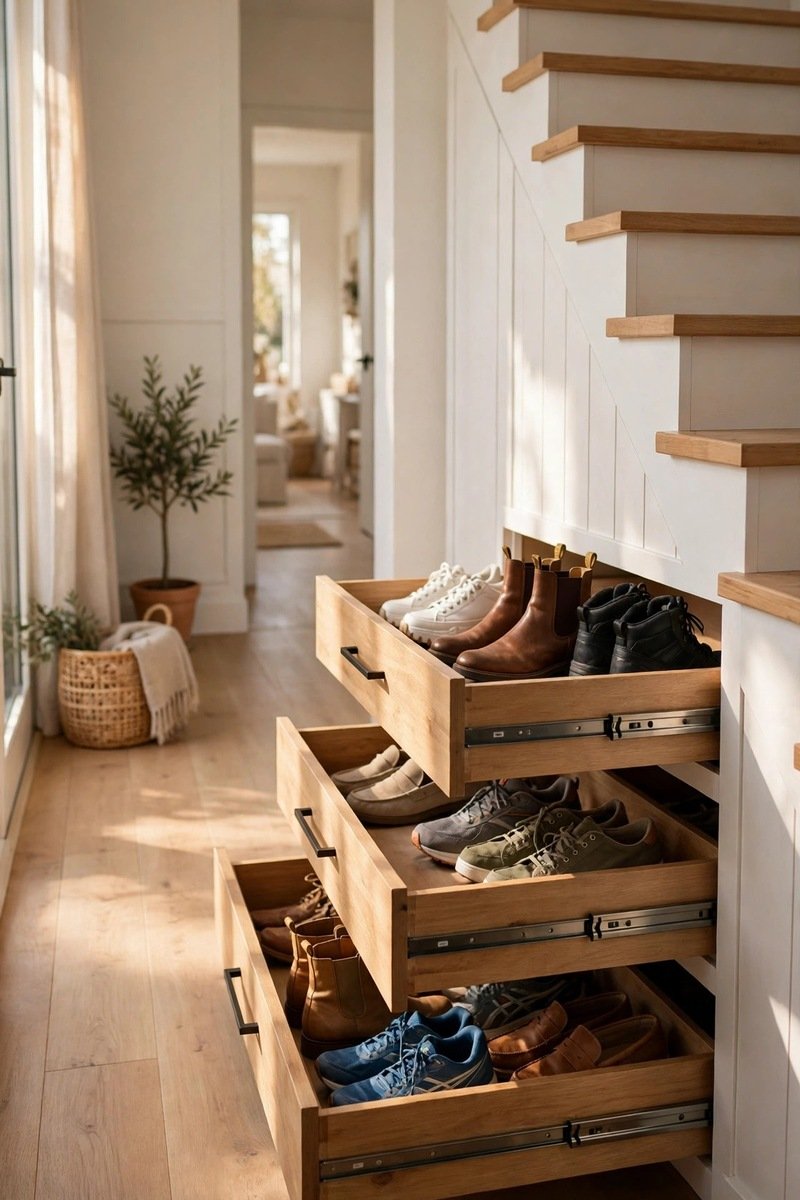 The slope under a staircase matches a shoe collection sorted by height. Pull out drawers fitted into that slope hold 15 to 20 pairs, deep end for tall boots, shallow end for sandals. A carpenter built set starts around $200, but flat pack drawer units can be trimmed to fit a straight section. If you rent, a low rolling rack under the stairs gives half the benefit with none of the building. Either way, it is one of the few shoe storage ideas that uses space nothing else wants.
17. Double Every Shelf With Stacking Shoe Slots
 Shoe slots are small angled stands that hold one shoe above the other, so a pair takes the shelf space of a single shoe. In practice they double any shelf, rack tier or cubby they sit on, as long as you have about 5 inches of height per slot. Packs work out at $3 to $5 per slot. They handle trainers, flats and most heels well. Boots and high tops do not fit, so think of slots as a multiplier for the closet shelves you already own.
18. Rotate Seasons With Two Labeled Bins
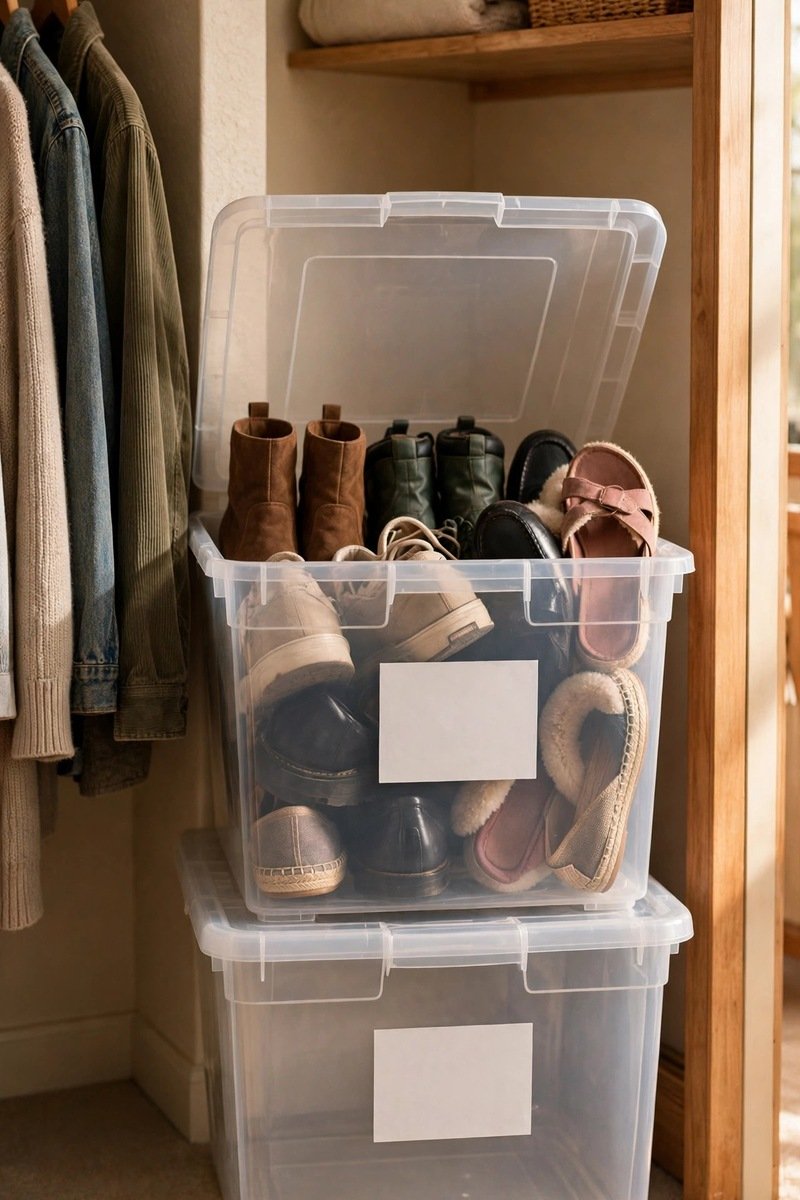 The cheapest capacity upgrade is not buying more storage, it is storing less at once. Keep two labeled 18 gallon bins: one holds the current season where you can reach it, the other holds the off season pairs on a closet top shelf or in the garage. Each bin swallows 12 to 15 pairs. Bins cost about $10 each. Swap them twice a year, wipe soles before they go in, and your everyday shoe storage ideas only ever have to handle half your collection.
Wall and Door Shoe Storage Ideas for Small Spaces
When the floor is full, the walls and doors are still empty. These last shoe storage ideas suit small apartments and rentals best: most need no drilling at all, and the ones that do use a few small screws in studs or door frames that patch in minutes.
19. Fill an Over the Door Pocket Organizer
 The clear pocket organizer is the veteran of small space storage for a reason. A standard 24 pocket version holds 12 pairs of light shoes, one shoe per pocket, costs $12 to $20, and hangs from two hooks over any door with about 1.5 inches of clearance at the top. It is perfect for flats, sandals, slippers and children’s shoes. Bulky trainers stretch the pockets and heavy boots will pull the hooks, so keep both on racks and save the door for the light pairs.
20. Float Shelves Low on an Entryway Wall
 Two or three floating shelves mounted low on an entryway wall hold shoes where a rack would block the walkway. A 24 to 36 inch shelf takes 3 to 4 pairs, shelves cost $15 to $30 each, and mounting the lowest one 8 inches off the floor leaves room to mop underneath. This is one of the neatest shoe storage ideas for a hallway with no floor to spare, because the shoes read as display rather than clutter. Use washable paint on the wall behind; soles will scuff it.
21. Display Heels on Picture Ledges
 Picture ledges were made for frames, but the shallow lip that stops a frame sliding is exactly what a stiletto heel hooks onto. A 24 inch ledge, 2.5 to 3.5 inches deep, displays 3 to 4 pairs of heels with the shoes angled like a shop window, and ledges cost $10 to $20 each. Run three ledges up a dressing area wall and 10 to 12 pairs become the decoration. As shoe storage ideas go it only works for heels; flats slide off, so give them the cubbies instead.
22. Hang Heels From Two Tension Rods
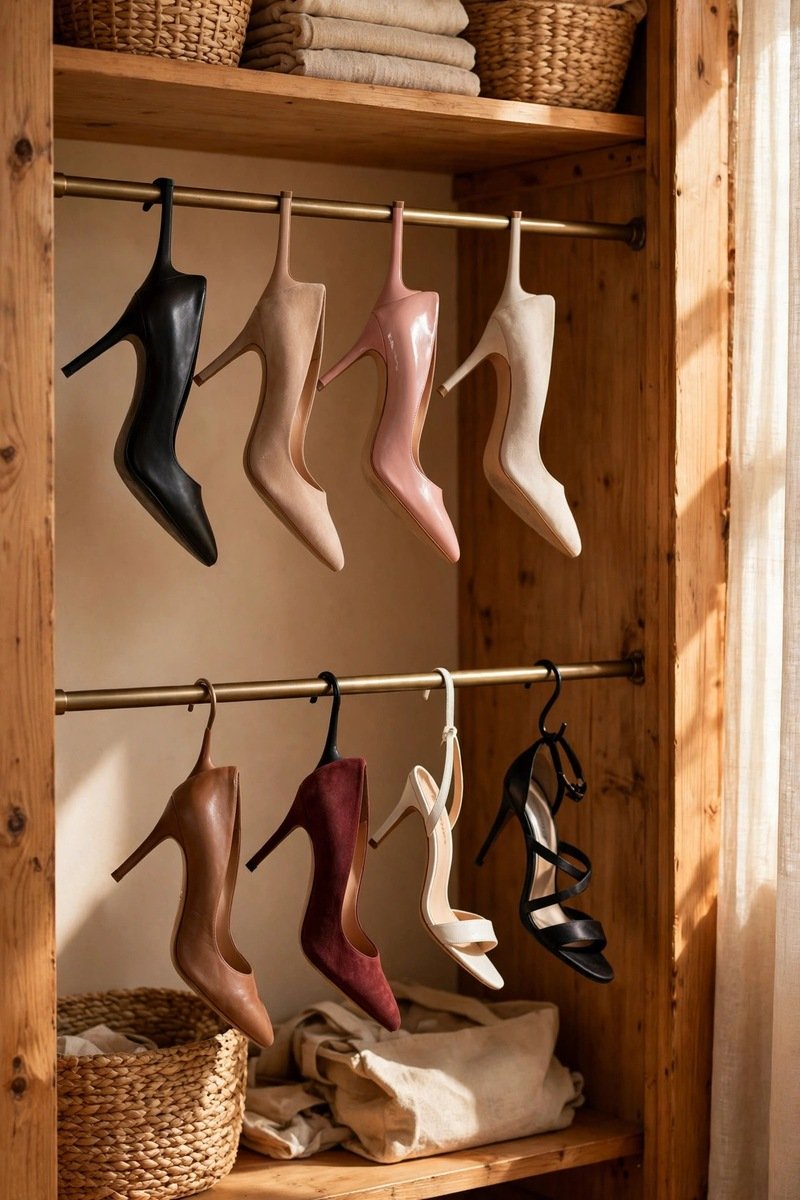 Two spring tension rods fitted across a closet alcove or a wide nook make a heel rail with no drilling at all. Fix the rods one above the other or side by side, and hang each pair by its heels over the rod; a 24 to 36 inch span holds 6 to 10 pairs. Rods cost $10 to $15 for the pair. This is the rental friendliest of all these shoe storage ideas, and it works just as well across the back of a deep shelf.
23. Clip Boots Upright on Hanging Boot Clips
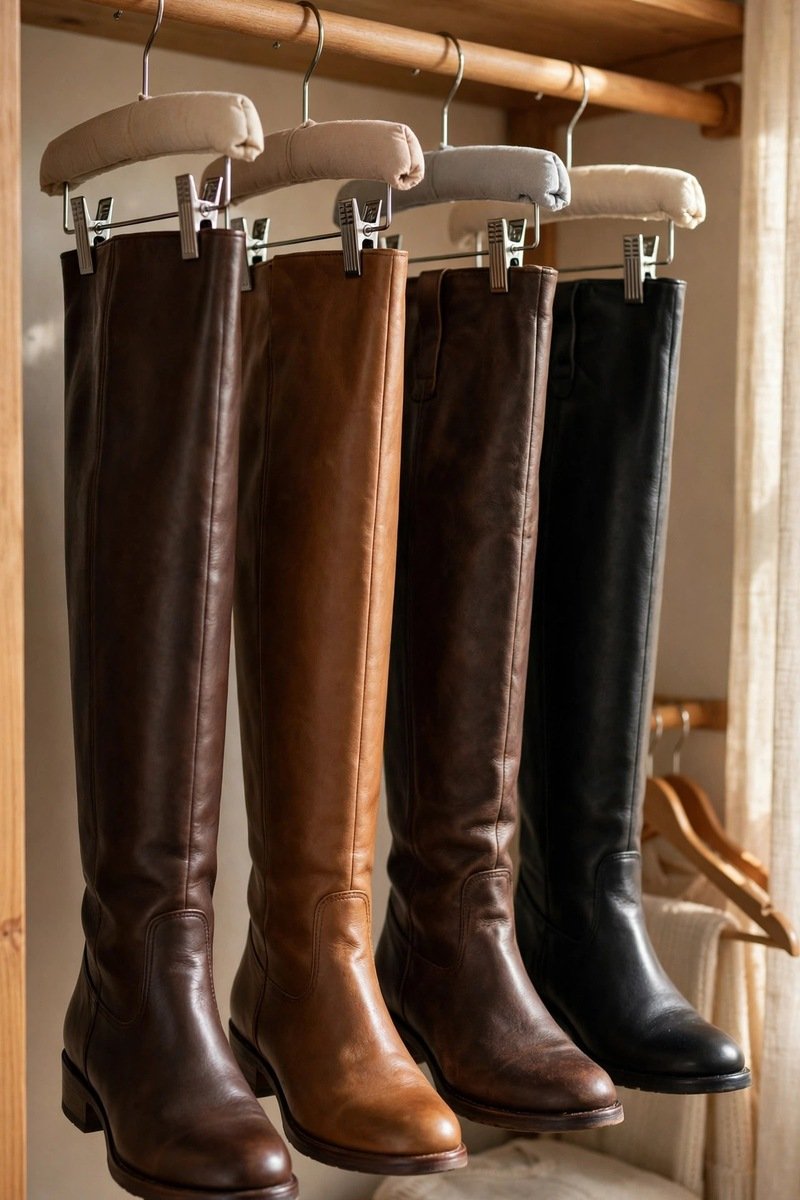 Boots stored on their sides or slumped against a wall crease at the ankle and age fast. Boot hangers fix that: a padded clip grips the top of each boot and the pair hangs from any closet rod, shaft straight and air moving around it. Sets of six hangers hold six pairs and cost $15 to $25. You need rod space and about 18 inches of drop for knee high boots. In my experience this single change keeps good boots looking new for years longer.
24. Build a Pegboard Shoe Wall in the Mudroom or Garage
 A 4 by 4 foot pegboard panel with sturdy hooks becomes a whole shoe wall for $30 to $60 including the hooks. Shoes hang by their heels or rest on peg hooks, 12 to 16 pairs on one panel, and children can reach and rehang the low rows themselves, which makes it a system the whole family maintains. Paint the board to match the wall and it looks deliberate, one of the few garage shoe storage ideas that does. Keep it for everyday and sports shoes, not your best leather.
25. Turn a Bookcase Into a Shoe Library
 A standard five shelf bookcase, about 30 inches wide, converts to shoe storage with one change: move the shelves closer together. Set the spacing at 6 to 7 inches for shoes, add one shelf with a $5 pack of shelf pins, and the case holds 15 to 20 pairs in a bedroom corner. New bookcases run $60 to $150, and thrifted ones cost far less. I have noticed a bookcase of shoes reads as furniture, not storage, which is why it works in rooms a rack would spoil.
Shoe Storage Ideas Cheat Sheet: Match the Fix to the Space
Short on time, this cheat sheet sums up the shoe storage ideas above by the problem they solve best.
- Entryway pile: slim flip drawer cabinet, or a cubby bench if you need a seat too.
- Wet boots and muddy trainers: a raised lip boot tray, never a closed cabinet.
- Kids shoes: one big open basket by the door. No lids, no drawers, no arguments.
- Closet floor pile: an expandable tiered rack under the short hanging clothes.
- See every pair at once: clear drop front boxes, stacked five to eight high.
- Small apartment, no closet: over the door pockets for light shoes, floating shelves for the rest.
- Boots that slump and crease: clip hangers on a rod, shafts upright.
- Too many pairs, any space: rotate seasons in two labeled bins and halve the problem.
Shoe Storage Questions I Get Asked Most
How many pairs should one storage unit hold?
Plan storage for the pairs you actually own plus two spaces of growing room, and count by location: daily pairs at the door, the main collection in the closet, off season pairs out of the way. Most households land between 15 and 30 pairs per adult once gym shoes, boots and occasion pairs are counted honestly.
What is the best way to store tall boots?
Upright, always. Boots folded or lying flat crease at the ankle and the shaft collapses over time. Of all the shoe storage ideas here, clip hangers on a rod work best; boot shapers inside the shaft, or a shelf with 15 to 18 inches of clear height, come close behind. If none of those fit, store boots in their original box on its side rather than loose on the floor.
How do I store shoes in a small apartment with no hall closet?
Go vertical and go hidden. An over the door organizer takes the light pairs, floating shelves take the daily pairs, and an under bed bin takes the rest. The three together hold 25 pairs or more without using a single square foot of floor you were not already standing on.
Should shoes stay in their original boxes?
Boxes stack neatly and block dust, but plain cardboard hides what is inside and the pile always gets opened from the wrong end. If you keep boxes, tape a photo or a written label on the end of each one. Clear drop front boxes give you the same stacking with none of the guessing, which is why they top my list of closet shoe storage ideas.
How do I stop stored shoes smelling?
Never store a pair that is still damp; leave wet shoes by the door on a tray for a full day first. Cedar inserts or a spoonful of baking soda inside each shoe overnight handles the rest. In closed bins, a small charcoal bag keeps the air fresh for months, and wash fabric trainers before they go into seasonal storage, not after.
Putting Your Shoe Storage Together
Start at the front door this weekend: one tray, one cabinet or one basket will end the daily pile, and everything else can follow a group at a time. If the entryway itself needs work beyond shoes, my hallway decor ideas cover the benches, hooks and lighting that make a small hall work harder, and the same measure-first approach runs through my linen closet organization ideas for the rest of the house. Save these shoe storage ideas on Pinterest before you shop, so the capacities and measurements are on your phone in the store.